2012年1月29日日曜日

10

Anime/Manga’s Good Influence on Children: How to Maximize it

Outline
1. research question
How can children overcome the negative influence of anime/manga and gain the good influence?
2. thesis statement
Children can learn many important things from anime/manga. They can avoid much violence by watching anime rather than reading manga, and they are not confused by the differences of the reality and the anime/manga by considering them.
3. body
a. The good aspects of anime/manga
b. The difference of manga and anime
c. The negative aspects of anime/manga and the solution

Introduction
When I was really into one shonen anime/manga, I watched it for more than ten hours per day. What made me forget time? There must be special power which attracts people especially in shonen anime/manga. Shonen manga means manga especially for boys. In this essay, I focus on shonen manga which includes violent acts or fighting scenes.
In many shonen anime/manga, children can see a lot of violence. Moreover, many justice heroes do violent acts to punish the bad guys(Masima, Kishimoto). This may make children think that violence is not so bad. However, there are many affirmative comments about shonen anime/manga, for example, “it’s cool!’, or “I really like the anime!”. Many popular anime, like Naruto, One Piece, Fairy Tail, show justice. Many of the heroes try to keep the peace or try to save their friends(Mashima, Kishimoto). Also, Anime/Manga is now very famous and popular not only in Japan but also over the world. According to NAVER, the number of Naruto volume 1 to 57 sold was 113030000 and it was translated in more than 30 countries and sold and the number was 30000000 in the survey in 2009(NAVER). According to Oricon Style, the number of Fairy Tail volume 30 sold in Japan was 196406(Oricon Style). Moreover, in 2006 Naruto, who is the hero of Naruto, was chosen as one of the most respected Japanese.(Newsweek).
Children can get a lot of good influences from anime/manga. When it is too violent, they can avoid them by choosing anime, not manga. Also, they are not confused by the differences between anime/manga and their real life by thinking about them.

1. The good aspects of manga/anime        
Anime/manga has a lot of good influence to children. Many shonen manga/anime  teach the importance of friendship, forgiveness or the importance of never give up mind. Even if children cannot learn them easily in their real life, they can learn them through manga/anime.
Analysis of  Fairy Tail
First example, "Fairy Tail" includes a lot of violent scenes, however in that anime/manga the importance of friendship, the power of friendship or forgiveness are really emphasized. This anime/manga is written and illustrated by Hiro Mashima. The story is fantasy adventures of wizards. This anime/manga includes a lot of violent acts. For example, in volume 28, page 52, one girl beats her enemy by her sword (Fig.1). However, what is impressive around the scene is no the violence, but why she has to beat the enemy, and why she can defeat him. She has to fight  against him because she wants to protect her friends. She can win the enemy thanks to the friendship. Even her enemy thinks “ON THE TIP OF THAT SWORD FLASH, RESTS THE HOPE SHARED BY EVERYONE...” (Mashima 52) This proves how strong their friendship is. As this example shows, Fairy Tail contains much heart touching scenes than violent scenes. According to Amazon Customer Reviews, 25/26 reviews say it is a great anime/manga. On Yahoo Answers, ally, who is a girl in New York, answered  that Fairy Tail is the best manga in the world, the story is based on friendship, and it tells us we can do anything with our friends, to the question, “Is Fairy Tail manga good?”. Here, the point is friendship. Around episode 22, one girl causes a war between one group of wizards and another for some reasons. She almost gives up fighting because she does not want to see her friends suffered. However, all the wizards in Fairy Tail never give up. It is all because she is their friend(Mashima 60). It must be touching, and it is what children cannot learn easily in their real life.
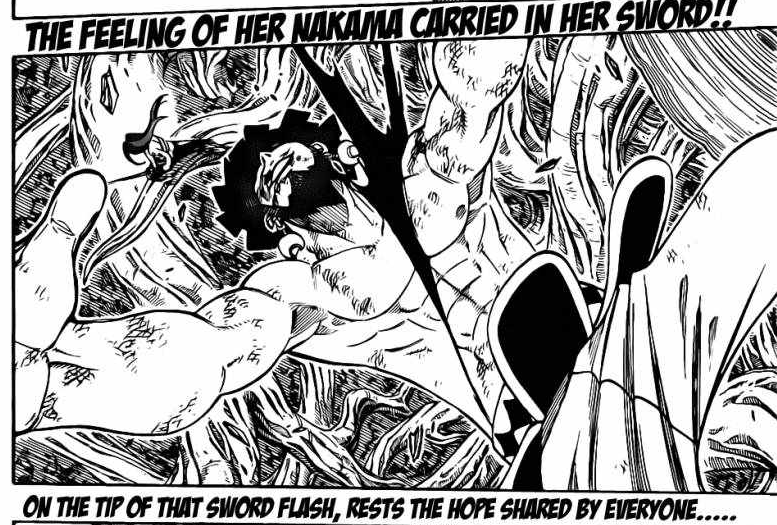
              Fig.1. Eruza killing Azuma. Illustrated by Mashima.
Analysis of Naruto
Second example, "Naruto" also includes much violent acts, but the violents acts which heroes or his friends do are all for justice. “Naruto” is written and illustrated by Masashi Kishimoto. The hero is a boy called Naruto, and he tries to become the leader of his town by overcoming his sad past experiences. Looking at one fan page of Naruto on facebook, 1,106,268 people cliked “like”. What is really touching is that Naruto never tries to revenge to people around him after he gets very strong. On the other hand, one of his friends, Sasuke tries to revenge to the people in the town. All people except for Naruto decide to kill him, but Naruto never thinks about that. He tries to save him and to make him mend his way. Naruto seeks the real peace. One man who tries to get the peace said that the revenge causes another revenge, and the sadness causes another sadness. However, Naruto argues that he stops the revenge not to cause another revenge(Kishimoto).Children can lean how important never-give-up is, and how to deal with people who do not treat them well from Naruto.
Therefore, anime/manga tells children friendship and never-give-up mind, so children learn that important things not only from the real life, but from the anime/manga life.

2. The comparison of anime and manga
When some manga is too violent to children at some ages, it is a nice way to enjoy the stories by anime, because the violent acts in anime are not as shocking as in manga in many cases. In Naruto manga, some scenes are very violent. In volume 4 page 62, the scene which one man kills his enemy is so shocking (Fig.2). However, on anime, the same scene is not so shocking (Fig. 3). On manga, the man’s arm goes through the enemy’s body, but it does not happen on anime. This kind of things often happen between manga and anime. In Rave Master manga, one man cuts his arm, but in anime he explodes his arm and it is hard to see what happens to his arm. As these examples shows, the violent scenes in anime is less shocking than those in manga. What children can gain from anime/manga is important, and it is worth watching or reading. Thus, watching anime is the best way to enjoy the story sometimes.
Fig.2. Kakashi killing Haku on manga. Illustrated by Kishimoto.
Fig.3. Kakashi killing Haku on anime. Illustrated by Kishimoto.

3. Anime/manga’s big negative influence and the solution
An anime/manga’s big problem is that it may make children confused in the differences between the anime/manga life and the real life, but it can be overcome by thinking about the differences. According to American Academy of Child and Adolescent Psychiatry, children are likely to think that everything on TV is true. This must cause children’s behaviors which are unbelivable in the real world(American Academy of Child and Adolescent Psychiatry). Moreover, Dowshen, who is a chief medical editor of KidsHealth, says that when children watch heroes do violent acts against their enemies, they respect that. Also, because of this, children can not judge what is wrong and what is right(Dowshen). Also, Kirsh, who is studying psychology said  “Violence in cartoons is an integral part of cartoon content” (Kirsh 548). However, there are some solutions. American Academy of Child and Adolescent Psychiatry also says that parents can choose the programs and let children think about the differences between the real world and the TV world(American Academy of Child and Adolescent Psychiatry). For example, characters in anime/manga do not die easily(Mashima). When children think about this, they can see that the characters are still alive but it is impossible in the real life, and they learn that they should not do that then. By thinking about that, they must learn what causes humans’ death, what hurt people, or what people should not do.


Conclusion
Children can learn friendship, never-give-up mind or something from anime/manga when they enjoy it in a proper way, considering the difference of anime/manga and themselves and choosing anime not manga in the case where the manga contains too much violences. As I showed in the examples of Fairy Tail and Naruto, anime/manga teaches children that it is important to protect their friends, to believe their friends, and not to give up. Even when children cannot learn them in school, they can do from the anime/manga world. Sometimes, manga contains shocking violent scenes. In that case, children choose anime, because the violent scenes are not so terrible. The big negative influence of anime/manga is that it may make children violent or do some unbelievable things. This is because children are confuse by the differences between the reality and anime/manga. However, they can overcome that by considering them well. It is true that anime/manga has negative impacts on children, but it really help them grow up when children overcome the problems.

Works Cited
         American Academy of Child and Adolescent Psychiatry. Children and Watching TV.
n.d. Web. 20 Dec. 2011.
Ankou. NAVER. Sekai de NARUTO Ninki Bakuhatsu! Kaigai Ninki no Himitsu [The reasons why NARUTO is so famous in the world]. 12 Sep. 2011. Web. 24 Jan. 2012.
Cartoon Network. The Weapons Known as Shinobi. YouTube. YouTube, n.d. Web. 11 Jan. 2012.
Cartoon Network. The Demon in the Snow. YouTube. YouTube, n.d. Web. 11 Jan. 2012.
           Dowshen, Steven. KidsHealth. How TV Affects Your Child. 2011. Web. 20 Dec. 2011.
Funimation Entertainment. Eruza vs. Azuma. YouTube. YouTube, n.d. Web. 22 Jan. 2012.
Kishimoto, Masashi. NARUTO. Vol. 3. San Francisco: VIZ Media, 2004. Print. 58 vols.
Kishimoto, Masashi. NARUTO. Vol.4. San Francisco: VIZ Media, 2004. Print. 58 vols.
Kishimoto, Masashi. NARUTO. Vol.5. San Francisco: VIZ Media, 2004. Print. 58 vols.
Kirsh, Steven. Cartoon violence and aggression in youth. ScienceDirect. 28 Nov. 2005. Web. 22 Dec. 2011.
Mashima, Hiro. Fairy Tail Vol. 28. New York: Kodansha Comic USA, 2011. Print. 30 vols.
Oricon Style. 26 Dec. 2011. Web. 10 Jan. 2012.


What I want to improve in my essay


・I need better title. My current title is Anime/Manga’s Good Influence on Children: How to Maximize it. However, the first part, Anime/Manga's Good Influence on Children looks a little bit longer. Also, How to Maximize it is a little bit shorter.
・I need more example in "comparison of anime and manga", such as "in this manga violence is terrible but in the anime violence is not so terrible. Or, I have to find some statistic or expert opinion which shows that violence in anime is not as terrible as that in manga.
・I need more specific example in Anime/manga’s big negative influence and the solution, such as "In Fairy Tail, the hero does not die even when he falls from the top of the building, but if that happen to the man in this world, he will die for sure" or something.

9

5 predictions
・Environment/ Nature will be destroyed in 100 years, but there will be artificial nature in 3012.
・Living/ Human beings will be looking for new living place, but they will not be able to find it by 2112.
・Education/ Students will use the computer or something, not paper notebook in 2112.
・Energy/ The energy will be lacking and people will be on the way to find new energy in 2112.
・Dominace of the earth/ The cuttlefish will dominate all creature in the world in 3012, not 2112 yet.

5 visions
・Education/ Students will take no PE class in 2112 because there will be no need to move a lot in life.
・Environment/ There will be more nature and all creatures will be happy in 2112.
・Dominance of the earth/ Some animals except for human beings will be leader of the earth in 3012 because the earth with human as leader seems failure.
・Energy/ There will be more environmentally friendly energy source.
・Politics/ There will be much more independent nations and there will be no war or conflict in the world.

2012年1月12日木曜日

8

Should "trait selection" (designer babies) be allowed? Sometimes? Never? Why or why not?

I think "trait selection" should be allowed sometimes. I mean too much designing is not good by sometimes. I really agree with the idea of Fukuyama which says that genetic engineering may change human nature. However, it should be done when parents really want that and they have good reasons. For example, one mather was bullied because of her color skin in one country, and she is going to continue to live there after her child's birth. Then, I think it is acceptable to make her child's skin some color exept her skin color. There must be a guarantee that her child will not bullied on he skin. According to Shannon, there is a way of thinking called Consequentialism. Who will be suffering in that case? Then, people can get the greatest number of happiness. Thus, trait selction should be allowed depending on the case.

2012年1月10日火曜日

7

a) According to Fukuyama, is genetic engineering of humans likely to occur in the future? What are the main obstacles in terms of technology and ethics and can they be overcome? Also, what are the main dangers?

He said that humans are not able to modify human DNA now, however he believes that humans will get the ability of genetic. There are some obstacles in this problem. First, the complexity of genes and traits is one of the obstacles. Human genes are really complicated and it is very hard to find out which causes which. Secondly, there is ethical problem about human experimantation. It is actually very dangerous to experiment on human beings because it may cause terrible results.Thirdly, population is also obstacle. The number of human is very large and genetic engineering will not catch up with the growing population. Fukuyama says that first two obstacles are easier to be overcome than the last one. But all of them can be overcome. The dangers of genetic engineering are side effects, eugenics, or inequality between rich people and not richman. Some of them, people can expect, but they have no idea about some of them.


b) What questions, critical reactions, or ideas do you have and want to discuss in relation to this article?

I understand genetic engineering, advantage of it, and disadvantage somehow. However, I really do not get the purpose of genetic engineering. Is it to make all people around the world perfect? Is it to make some particular people better than others? I want to believe that the first one is the purpose if the genetic engineering happens. Yet, if all human beings are perfect, some terrible thing will happen I guess. The company which sells medicine will be no longer needed, because no one get sick. Some teacher will be no longer needed, because all people are very intelligent and they do not need that help. Though I imagine these disaster, I still long for the first purpose. It is all because discrimintation is the worst. When all people are perfect, everyone is equal. However, the purpose of genetic engineering is not clear to me. I also think that it is not so clear to many people. When the purpose is not obvious, I think people should not do that. Here, I really want to say "十人十色(So many men, so many minds)" and "みんな違ってみんないい (by Misuzu Kaneko) (Difference gives us something wonderful), though being perfect does not mean being same, but they are kind of close.

2012年1月2日月曜日

6

What were the best memories for me in 2011?
One of my best memories was that I went to Croatia during summer vacation. I visited Plitvice Lakes National Park, and I was impressed because nature there was very very beautiful.
Another of my best memories was that I went to a concert of "Maksim Mrvica", who is my favorite pianist, in Tokyo. His concert was amazing, his piano was awesome and beautiful.
And these two my best memories were really connected because Maksim is from Croatia. I thought, his piano was influenced by nature in Croatia. I was really moved by the concert thanks to the trip.


What are my goals for 2012?
I've not played the piano much since when I entered ICU. So, I'd like to play/practice the piano more. I want to be better at playing the piano than I used to be, if possible.^^"

2011年12月23日金曜日

5

How Anime/Manga Influences on Children


Outline


1: research question
Though it is true that anime has bad influence on people, is the good aspect of anime much bigger than the negative aspect?

2: thesis statement
It is true that there are violence or confusion between the real world and the imaginary world in anime, however it is also true that some anime give lessons.

3: body
1. Fairy Tail (example1)
basic information, summary of the story, comments from Yahoo Answers, or Amazon, my investigation
2. Naruto (example2)
basic information, summary, facebook, my investigation
3. Negative influence of anime-manga. How to overcome that.


4: sources
American Academy of Child and Adolescent Psychiatry. Children and Watching T/, Dec 2011. http://www.aacap.org/cs/root/facts_for_families/children_and_watching_tv
Dowshen, Steven. How TV Affects Your Child. KidsHealth. Oct 2011
http://kidshealth.org/parent/positive/family/tv_affects_child.html#
Facebook, Naruto, One Piece, Fairy Tail, and so on


Draft


Introduction
When I was really into one shonen anime/manga, I watched it for more than ten hours per day. What made me forget time? There must be special power which attracts people especially in shonen anime/manga. Shonen manga means manga especially for boys. In this essay, I focus on shonen manga which includes violent acts or fighting scene. In many shonen anime/manga, people can see a lot of violence. Moreover, many justice heroes do violent acts to punish the bad guys. This may make children think that violence is not so bad. However, there are many affirmative comments about shonen anime/manga, for example, “it’s cool!’, or “I really like the anime!”. Many popular anime, like Naruto, One Piece, Fairy Tail, show justice. Many of the heroes try to keep the peace or try to save their friends. Anime/manga which teaches friendship, justice, or peace to children has much more good influences than bad influences which the violent acts cause.

            I explain two anime/manga as examples.

Body1
First example, "Fairy Tail" includes a lot of violent scenes, however in that anime/manga the importance of friendship, the power of friendship or forgiveness are really emphasized. This anime is written and illustrated by Hiro Mashima. The story is fantasy adventures of wizards. According to Amazon Customer Reviews, 25/26 reviews say it is a great anime/manga. On Yahoo Answers, ally, who is a girl in New York, answered that Fairy Tail is the best manga in the world, the story is based on friendship, and it tells us we can do anything with our friends, to the question, “Is Fairy Tail manga good?”. Here, the point is friendship. Around episode 22, one girl causes a war between one group of wizards and another. The girl’s family is very rich, and she belongs to a group called “Fairy Tail”. She hides the fact that she is actually very rich because she hate her father and ran away from home. Then, a group called “Phantom Lord” tries to carry off the girl to demand ransom. She almost give up fighting because she does not want to see her friends suffered. However, all the wizards in Fairy Tail never give up. It is all because she is their friend. It must be touching, and it is what children cannot learn easily in their real life.

Body2
Second example, "Naruto" also includes much violent acts, but the violents acts which heroes or his friends do are all for justice. “Naruto” is written and illustrated by Masashi Kishimoto. The hero is a boy called Naruto, and he tries to become the leader of his town by overcoming his sad past experiences. Lookin at one fan page of Naruto on facebook, 1,106,268 people cliked “like”. What is really touching is that Naruto never tries to revenge to people around him after he gets very strong. On the other hand, one of his friends, Sasuke tries to revenge to the people in the town. All people except for Naruto decide to kill him, but Naruto never thinks about that. He tries to save him and to make him mend his way. Why people can think that Naruto is wrong because he does violence to his enemies? It is true that what he does is violence, but how can people blame him? Children can lean how important never-give-up is, and how to deal with people who do not treat them well.

Body3
It is true that there is bad aspect in shonen anime/manga. According to American Academy of Child and Adolescent Psychiatry, children are likely to think that everything on TV is true. This must cause children’s behaviors which are unbelievable in the real world(American Academy of Child and Adolescent Psychiatry). Moreover, Dowshen, who is a chief medical editor of KidsHealth, says that when children watch heroes do violent acts against their enemies, they respect that. Also, because of this, children can not judge what is wrong and what is right(Dowshen). Also, Kirsh, who is studying psychology said “Violence in cartoons is an integral part of cartoon content” (Kirsh 548) However, there are some solutions. American Academy of Child and Adolescent Psychiatry also says that parents can choose the programs and let children think about the differences between the real world and TV world(American Academy of Child and Adolescent Psychiatry).

Conclusion
There are many violent acts in anime/manga which can do bad influences on children, however the good effects of anime/manga are important. Like “Fairy Tail” or “Naruto”, anime/manga shows friendship or never give up spirit. Even when children can not learn this in their real life, they can see how they are important from anime/manga. Though violence in anime/manga does negative impacts on children, parents can prevent children from watching some too violent anime/manga when parents judge it is harmful. Moreover, by discussing about why children should not watch some kinds of anime/manga, parents may teach what is cruel or what is morally wrong to children. Anime/manga, in spite of whether it includes much violence or immoral things, can be a tool for children to learn something necessary in their life.


Works Cited
American Academy of Child and Adolescent Psychiatry. Children and Watching TV. Web. 2011.
Dowshen, Steven. KidsHealth. How TV Affects Your Child. Web. 2011.
Kirsh, Steven. Cartoon violence and aggression in youth. ScienceDirect. Web. 2005.


Q1. How is your essay so far?
This is my current best essay, and I do not find any terrible mistakes. But my citation seems a little bit wrong, or maybe completely wrong. I’m gonna read LBH this winter vacation (I hope!).

Q2. Is your argument (thesis and supporting evidence) a persuasive argument? Which parts of your argument (reasons, solutions etc.) seem to need more support? What kind of support would be good for each of those parts?

My thesis is not so bad, I guess. But the supporting evidence is not enough, because I have to beat the experts’ opinions saying “anime/manga is bad”. I wrote about “naruto” and “fairy tail” to show how nice anime/manga is, so I have to find much more comments on fan page, or facebook to show the reality of anime/manga. If possible. I want to find experts’ opinion supporting my thesis. This time, I am planning to use many opinions from not experts people to support my thesis. It is probably not so strong support. So, I should prove my thesis is true by the number. 

Q3. What other ideas/questions do you have for improving/developing your essay further?

I’m sure that I will watch all episodes of Fairy Tail and find the touching and impressive episodes. Also, I am thinking about have interview some of my friends who like Fairy Tail or Naruto. Or, I will try to find some anime/manga which is regarded as bad ones, and compare them with others, if I can.

The hero in Fairy Tail and one of his friends. Illustrated by Hiro Mashima.

Main characters in Naruto. Illustrated by Masashi Kishimoto.


2011年12月19日月曜日

4

Summary and Reaction
In the article, Morioka argued that the Japanese society will not be completely same as American society, though Japanese society is modernizing. He also explained the reasons of this. The biggest reason is Japanese cultural background, he said. There is not enough scientific support or something about that, though. I really agree with his idea that Japanese bioethics should be based on Japanese culture. However, what he think is Japanese culture is different from what I think is Japanese culture. It is because Japanese culture he mentioned is a little bit old fashioned, I feel. He is worring about the future of bioethics which is caused by organ transplant from brain dead body. In his opinion, this cause not-human-like society, I mean people will be robot or something. This might be true. He said that the solution of this problem is positive aspect of Japanese culture.
Summarizing Morioka article, the point is that Japan is changing into Western-like country. However, it will not be same as American. The reason is Japanese culture mostly. The dangerous thing is that human may be no longer human, which means humans think nothing about dead body. Japanese bioethic is changing but many people cannot catch up with it. Japan and Japanese bioethics should think about Japanese culture more.
I agree with some of his opinions. However, he used "I think" or "I believe" too mcuh. It is a little too emotional. Moreover, his words are also emotiona. And, he did not give enough explanation, for example, what south and/or east European countries are.

My opinion to a) Will you donate your own organs if you are brain dead?
I will do that, however it might  depend on how old I am. What support this opinnion is "intuitionism" from Shannon. What I think is most important is how long future the people have. For example, I will donate my organs when I am 80 years old.[ Here, I'd like to answer to the question "c) Should the organs of young children be donated?" in this respect. I disagree with this, because they are "young" children. This is very rare case, but sometimes brain dead patients recover. However, it takes a lot of time. When the patients are still young, there is hope. Yet, when they are old enough, there is less or no hope.] Another thing that support my idea is Consequentialism from Shannon. How many organs are in my body? I do not know the exact number, but it must be more than 2. If I donate my organs, more than 2 people will be saved. One death leads more than two lives. This is very reasonable. Therefore, I will donate my organs basically.